
HEAD INJURY
CAUTION
IS IT AN EMERGENCY?
RECOMMENDED MODULES FOR TREATMENT

CPR

INJURIES

WOUNDS

BLEEDING
WHAT TO DO FIRST
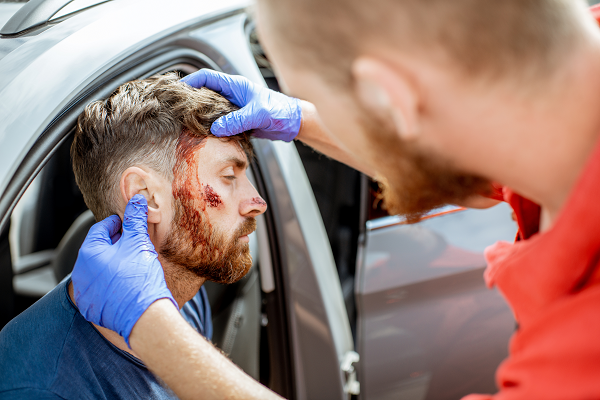
CHECK FOR THE FOLLOWING SIGNS
There may be:
- A scalp wound
- Clear fluid or watery blood from the nose or an ear (this indicates a serious underlying head injury)
- Impaired consciousness
how to treat it
APPLY DIRECT PRESSURE TO ANY WOUND
Replace any displaced skin flaps over the wound.
Put a sterile dressing or a clean gauze pad over the wound.
Apply firm, direct pressure with your hand to control the bleeding.
SECURE DRESSING WITH BANDAGE
Secure the dressing over the wound with a roller bandage to help maintain direct pressure on the injury.
HELP CASUALTY LIE DOWN
Help the casualty lie down, ideally on a blanket.
Ensure that his head and shoulders are slightly raised.
Make him as comfortable as possible.
MONITOR CASUALTY
Monitor and record the casualty’s vital signs—level of response, breathing, and pulse.
Call for emergency help if there are any signs of severe head injury.
CAUTION
- If blood seeps through the pad, place a second one on top of the first.
- Be aware of the possibility of concussion.
- Monitor a casualty after a head injury.
- If he recovers initially, but deteriorates hours or days later, call for emergency help immediately.
- If the casualty loses consciousness and is not breathing, begin CPR with chest compressions.
- Always suspect the possibility of a neck (spinal) injury.