
BROKEN BONES
CAUTION
IS IT AN EMERGENCY?
RECOMMENDED MODULES FOR TREATMENT

INJURIES

WOUNDS

BLEEDING

ESSENTIALS
WHAT TO DO FIRST
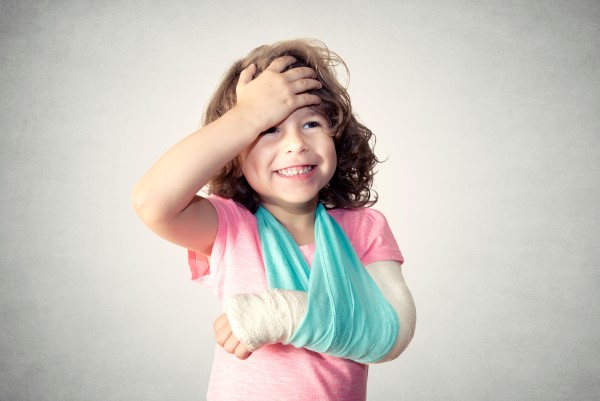
CHECK THE CASUALTY FOR THE FOLLOWING
- Distortion, swelling, and bruising at the injury site
- Pain and difficulty in moving the injured part
There may be:
- Bending, twisting, or shortening of a limb
- A wound, possibly with bone ends protruding
how to treat it
SUPPORT INJURED PART
Help the casualty support the affected part at the joints above and below the injury, in the most comfortable position.
PROTECT INJURY WITH PADDING
Place padding, such as towels or cushions, around the affected part to support it.
SUPPORT WITH SLINGS OR BANDAGES
For extra support or if help is delayed, secure the injured part to an uninjured part of the body.
For upper body injuries, use a sling; for lower limb injuries, use broad and narrow-fold bandages.
Tie knots on the uninjured side.
TAKE OR SEND CASUALTY TO THE HOSPITAL
A casualty with an arm injury could be taken by car if not in shock, but a leg injury should go by ambulance, so call 911 for emergency help. Treat for shock. Monitor and record the casualty’s level of response, breathing, and pulse until help arrives.
CAUTION
- If there is an open wound, cover it with a sterile dressing or a clean gauze pad and bandage it in place.
- Do not give the casualty anything to eat or drink because an anesthetic may be needed.
- Do not raise an injured leg when treating a casualty for shock.