
Becoming a first-aider
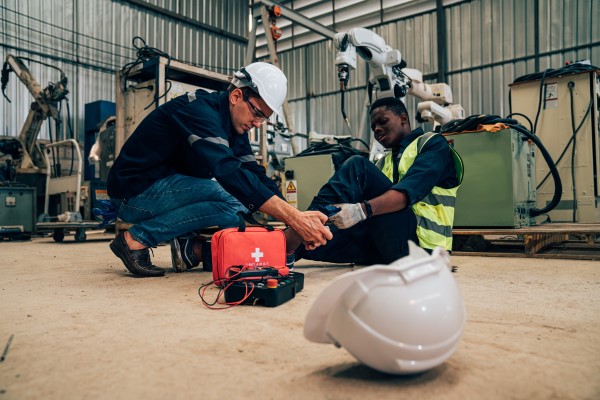
How to prepare yourself
- Be calm in your approach
- Be aware of risks (to yourself and others)
- Build and maintain trust (from the casualty and the bystanders)
- Give early treatment, treating the most serious (life-threatening) conditions first
- Call appropriate help
- Remember your own needs
Protect yourself from infection
- Do wash your hands and wear latex-free disposable gloves (in case you or the casualty are allergic to latex). If gloves are not available, ask the casualty to dress his or her own wound, or enclose your hands in clean plastic bags.
- Do cover cuts and scrapes on your hands with waterproof dressings.
- Do wear a plastic apron if dealing with large quantities of body fluids, and wear glasses or goggles to protect your eyes.
- Do dispose of all waste safely (p.18).
- Do not touch a wound or any part of a dressing that will come into contact with a wound with your bare hands.
- Do not breathe, cough, or sneeze over a wound while you are treating a casualty
Dealing with a casualty
- Make eye contact, but look away now and then so as not to stare.
- Use a calm, confident voice that is loud enough to be heard but do not shout.
- Do not speak too quickly.
- Keep instructions simple: use short sentences and simple words.
- Use affirming nods and “mmms” to show you are listening when the casualty speaks.
- Check that the casualty understands what you mean—ask to make sure.
- Use simple hand gestures and movements.
- Do not interrupt the casualty, but always acknowledge what you are told; for example, summarize what a casualty has told you to show that you understand.
Special considerations
In first aid, administering medication is largely confined to relieving general aches and pains. It usually involves helping a casualty take his own medicines. A variety of medications can be boughtwithout a doctor’s prescription. However, you must not buy or borrow medication to administer to a casualty, or give your own. If you advise the casualty to take any medication other than that stipulated in this manual, he may be put at risk and you could face legal action as a consequence. Whenever acasualty takes medication, it is essential to make sure that:
- It is for the condition
- It is not out of date
- It is taken as advised
- Any precautions are strictly followed
- The recommended dose is not exceeded
- You keep a record of the name and dose of the medication as well as the time and method of administration
Aspirin should never be given to anyone under the age of 16 years because there is risk of a rare condition called Reye’s syndrome.