
SPINAL INJURY
CAUTION
IS IT AN EMERGENCY?
RECOMMENDED MODULES FOR TREATMENT

CPR

INJURIES

WOUNDS

ESSENTIALS
WHAT TO DO FIRST
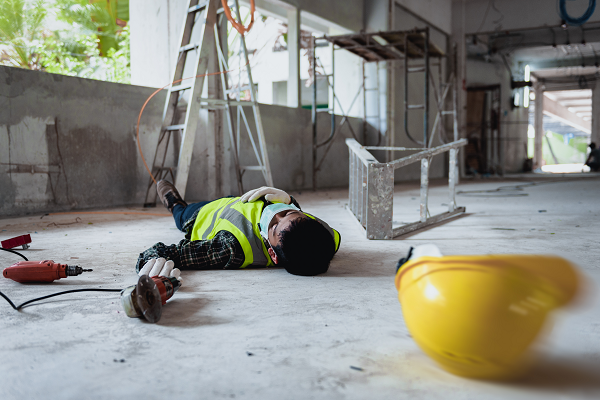
CHECK FOR THE FOLLOWING SIGNS
Can occur after a fall from a height onto the back, head, or feet
There may be:
- Pain in neck or back
- Step, irregularity, or twist in the normal curve of the spine
- Tenderness in the skin over the spine
- Weakness or loss of movement in the limbs
- Loss of sensation, or abnormal sensation
- Loss of bladder and/or bowel control
- Difficulty breathing
how to treat it
STEADY AND SUPPORT HEAD
Tell the casualty not to move.
Sit or kneel behind his head and, resting your arms on the ground, grasp either side of the casualty’s head and hold it still.
Do not cover his ears.
PLACE EXTRA SUPPORT AROUND HEAD
Continue to hold his head and ask a helper to place rolled towels, or other padding, around the casualty’s neck and shoulders for extra support.
CALL FOR EMERGENCY HELP
Call for emergency help.
If possible, ask a helper to make the call while you support the casualty’s head and neck.
Tell the dispatcher that a spinal injury is suspected.
MONITOR CASUALTY
Monitor and record the casualty’s vital signs—level of response, breathing, and pulse—until help arrives.
CAUTION
- Do not move the casualty unless he is in danger.
- If the casualty is unconscious, and is not breathing, begin CPR with chest compressions
- If you need to turn the casualty into the recovery position use the log-roll technique.